

Mold Testing in Staunton: Air Samples, Surface Samples, and How to Read Your Results
You've decided to test for mold. Good. But when the inspector starts talking about air cassettes, tape lifts, spore counts, and outdoor baselines, it can feel like you need a science degree to understand the results.
You don't. Mold testing follows a few simple ideas, and once you understand them, the lab report makes much more sense. Here's a straightforward guide to the main types of mold testing used in Staunton homes, what each one tells you, and how to read the results.
Why Test at All?
If you can see mold, you already know there's a problem. Testing is most useful when:
- You smell mustiness but can't find the source
- You want to know how widespread a problem is
- Someone in the home has symptoms and you want answers
- You're buying or selling a home
- You want to confirm a treatment worked
- You've had water damage and want to know if mold followed
Testing works best alongside a thorough visual inspection and moisture assessment, not as a replacement for them.
Air Sampling
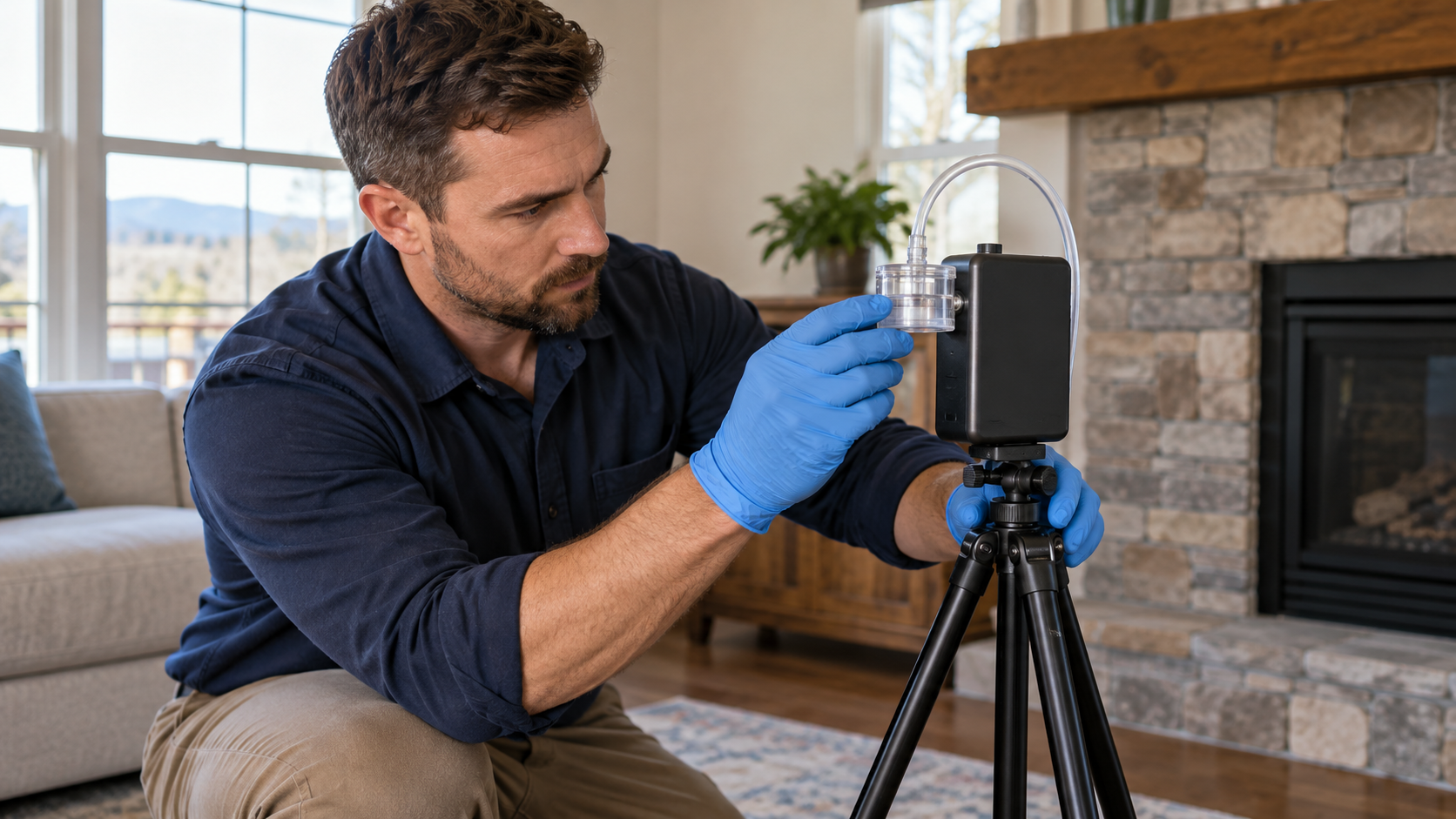
Air sampling uses a pump to pull a measured amount of air through a collection device, often called a spore trap cassette. Spores in the air stick to a surface inside the cassette, which is then sent to a lab for analysis.
What it tells you: The types and concentrations of mold spores in the air at the time of sampling.
Why an outdoor sample matters: Mold spores are always present outdoors. An outdoor sample serves as a baseline. If indoor levels are much higher than outdoor levels, or if indoor samples show types of mold that aren't present outside, it suggests an indoor source.
Limitations: Air levels can change throughout the day. Results reflect a snapshot, and some mold behind walls may not show up in air samples if spores aren't circulating.
Surface Sampling
Surface samples come directly from a suspicious area. Common methods include:
- Tape lifts: Clear tape pressed against a surface, then sent to the lab
- Swabs: A sterile swab rubbed across a surface
- Bulk samples: A small piece of material, like drywall or carpet
What it tells you: Whether a stain or spot is mold, and what type is growing there.
Limitations: It only tells you about that specific spot, not the whole home.
Wall Cavity Sampling
When mold is suspected behind a wall, an inspector may take an air sample from inside the wall cavity through a small hole. This can help confirm hidden growth without opening up the wall.
What About DIY Test Kits?
Home test kits, especially petri dishes left open in a room, are widely sold. The problem is that mold spores are everywhere, so almost every dish will grow something. Without controlled sampling and an outdoor comparison, the results don't tell you much about whether you have an indoor mold problem. Professional testing with lab analysis gives far more reliable information.
How to Read a Mold Lab Report
Lab reports can look intimidating, but focus on a few key things:
- Sample locations: Which rooms were tested and where the outdoor sample was taken.
- Mold types: Names like Aspergillus/Penicillium, Cladosporium, or Stachybotrys. Some are common outdoors, while others are typically associated with water-damaged indoor materials.
- Counts: Usually listed as spores per cubic meter of air for air samples.
- Indoor vs. outdoor comparison: The most important part. Higher indoor counts or unusual types indoors point to a problem.
- Inspector's interpretation: A good report explains what the numbers mean for your home.
Our post on categories of mold explains the differences between common types.
Testing Before and After Treatment
Testing before treatment helps define the problem. Testing after treatment can confirm that spore levels have returned to normal. This is especially useful for real estate transactions, rental properties, or households with sensitive family members.
Why Staunton Homes Benefit From Testing
Staunton is full of older homes, many in historic neighborhoods, with basements, plaster walls, and decades of renovations layered on top of each other. Hidden moisture behind walls or under floors is common. Testing helps find problems that aren't visible and gives you clear information before deciding on treatment.
What Happens After Testing
If the lab confirms higher-than-normal mold levels, the next steps are fixing the moisture source and treating the space. We treat with a patented dry fog: InstaPURE first, to neutralize spores floating in the air and growth on surfaces, followed by EverPURE, which forms a barrier that makes it harder for mold to return. Because the fog travels where wipes and sprays can't, demolition is rarely needed, and one visit is typically enough.
Common Questions
How long do lab results take?
Turnaround depends on the lab and the type of analysis. Your inspector will tell you when to expect results.
Should I close windows before air testing?
Inspectors often ask for windows and doors to stay closed for a period before sampling so results reflect normal indoor conditions. Follow your inspector's instructions.
Choosing Where to Sample
A good inspector chooses sample locations based on what they see and smell. Typical choices include the room with the strongest odor, a basement or crawl space, a bedroom where symptoms are worse, and an outdoor control sample. Sampling a few strategic spots usually gives a clearer picture than testing every room.
Mold Testing in Staunton
Our Staunton team provides mold inspection and testing in Staunton, Waynesboro, Augusta County, and throughout the Shenandoah Valley. Our team includes MICRO Certified Mold Inspectors.
Contact us or call (540) 208-2271 to schedule testing.