

What Does a Mold Specialist Do? A Harrisonburg Homeowner's Guide
When you suspect mold, the person you call matters. A general handyman might scrub the visible spots. A painter might cover them up. A mold specialist looks for why the mold is there, how far it has spread, and what it will take to stop it for good.
But what exactly does a mold specialist do, and how do you know you've found a qualified one? Here's a look at the different roles in the mold industry, the credentials to look for, and what to expect when a specialist visits your Harrisonburg home.
Three Types of Mold Professionals
Mold inspectors
Inspectors evaluate a property for signs of mold and moisture. They look for visible growth, water damage, musty odors, and conditions that support mold. Many also take air or surface samples for laboratory analysis.
Mold remediation contractors
Remediation contractors treat and remove mold contamination and help correct the conditions that caused it. Their work may include cleaning, treating, drying, and in some cases removing damaged materials.
Industrial hygienists and environmental consultants
For large commercial buildings, complex health situations, or legal disputes, an industrial hygienist may design sampling plans and remediation protocols. Most residential projects don't require this level of consulting, but it's useful to know the option exists.
Some companies, including ours, offer both inspection and remediation, which allows one team to evaluate the problem, treat it, and confirm the results.
Credentials Worth Asking About
Training and credentials from recognized industry organizations are one of the best ways to gauge a mold professional's qualifications. Look for:
- Professional certifications in mold inspection or remediation from recognized training organizations
- Liability insurance that covers mold work
- Experience with homes like yours, including older Valley homes with basements and crawl spaces
- Reviews and references from local customers
- Clear written estimates that explain the scope of work
At Pure Maintenance of the Blue Ridge, our team includes MICRO Certified Mold Inspectors and MICRO Certified Mold Remediation Contractors, and we're BBB Accredited.
What Happens During a Specialist's Visit
1. Conversation
A good specialist starts by listening. When did you first notice the problem? Has there been a leak or flood? Are family members experiencing symptoms? Where do you notice odors?
2. Visual inspection
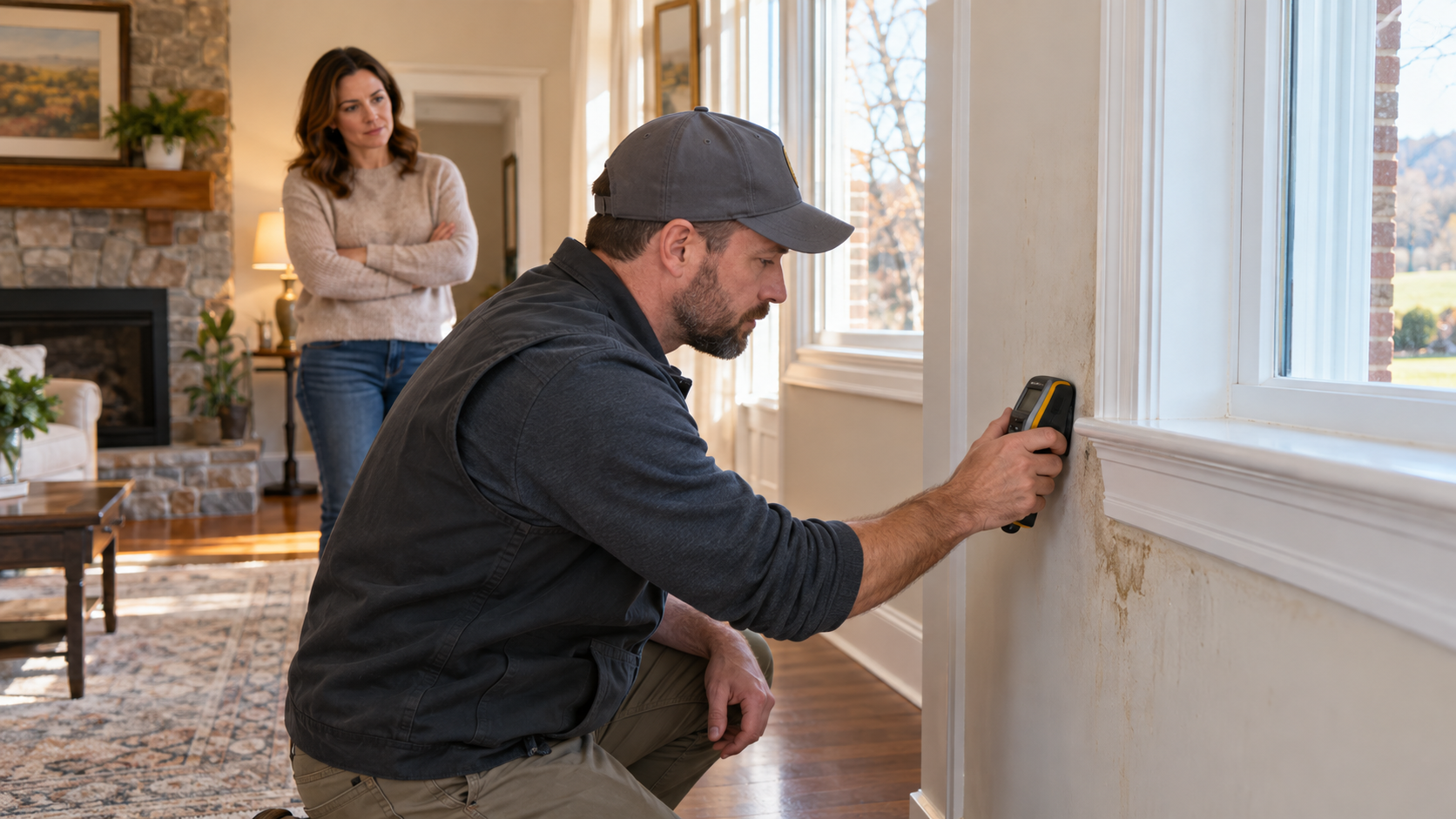
The specialist examines likely problem areas: basements, crawl spaces, attics, bathrooms, kitchens, laundry rooms, windows, and HVAC components. They look for staining, discoloration, peeling paint, warped materials, and condensation.
3. Moisture assessment
Moisture meters and thermal imaging can reveal damp areas behind walls and under floors that aren't visible to the eye. Finding moisture is critical, because mold follows water.
4. Sampling, if appropriate
Air samples compare indoor spore levels with outdoor levels. Surface samples identify what's growing on a specific material. Not every situation requires sampling, and a good specialist will explain when it's useful. Our post on how mold inspection and testing work goes into more detail.
5. Findings and recommendations
Finally, the specialist explains what they found, how severe it is, what treatment is recommended, and what you can do to prevent recurrence.
Questions to Ask a Mold Specialist
- What certifications do you and your technicians hold?
- Do you offer both inspection and remediation?
- How will you find hidden mold?
- Will you identify the moisture source?
- What treatment method do you use, and why?
- Will we need to leave the home during treatment?
- How will results be verified?
- Is your work covered by any warranty?
Red Flags
- Recommending major demolition without explaining why
- Promising to eliminate every mold spore permanently
- Using scare tactics or pressure to sign immediately
- Skipping the moisture source entirely
- Offering only bleach or painting over stains
When to Call a Mold Specialist
- A musty smell you can't trace
- Visible mold larger than a small patch
- Mold that keeps coming back after cleaning
- Water damage from a leak, flood, or roof problem
- Buying or selling a home
- Family members with symptoms that improve when away from home
Our Approach
Once we know what we're dealing with, our patented dry fog system goes to work in two stages: an InstaPURE fog that attacks mold in the air and on surfaces, then an EverPURE fog that leaves behind a protective antimicrobial coating. Most homes need no tear-out, and the job is usually finished in a single trip.
How Long Does an Evaluation Take?
Most residential evaluations take about an hour or two, depending on the size of the home, how many areas need attention, and whether samples are collected. Larger homes, crawl spaces, and attics add time. If samples go to a lab, results usually follow within a few days, and your specialist will walk you through what they mean.
Preparing for the Visit
- Make a list of symptoms, smells, and any past leaks or floods
- Clear access to the basement, crawl space, attic, and under sinks
- Gather any previous inspection reports or repair records
- Note which rooms seem to bother family members most
The more information you share, the faster the specialist can zero in on the problem.
Talk With a Mold Specialist Near Harrisonburg
Pure Maintenance of the Blue Ridge serves Harrisonburg, Rockingham County, Staunton, and the surrounding Shenandoah Valley. We offer free evaluations with a certified mold inspector.
Contact us or call (540) 208-2271 to schedule your visit.